
A Comfortable Edge
Control or Chaos

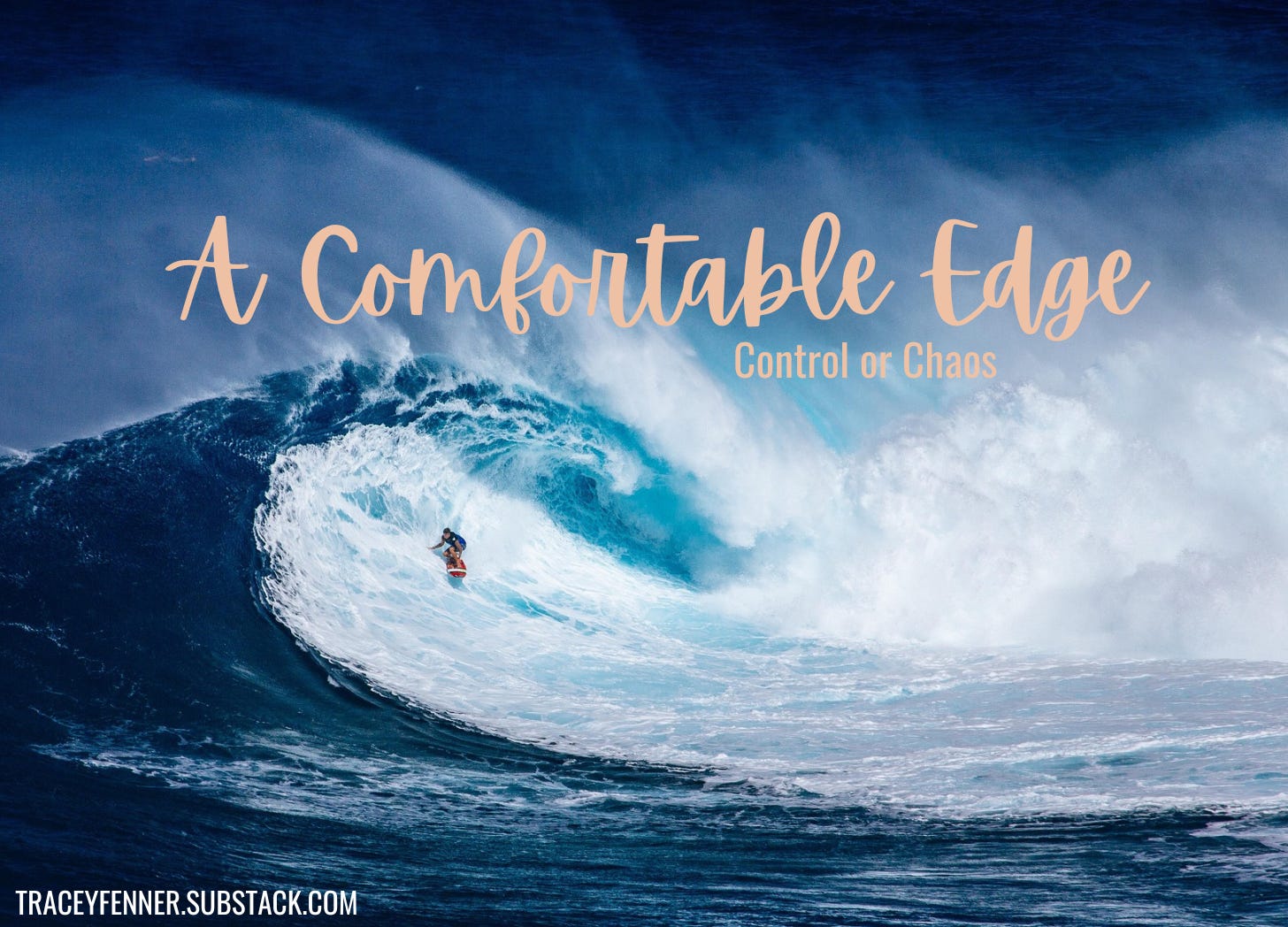
Imagine for a moment a highly skilled surfer riding a massive wave. She is at the mercy of the ocean’s raw power, balancing on the very edge of control and chaos. The wave is fast and relentless, but she moves with it, not against it. Her years of practice allow her to stay centred, reading the water, adjusting her stance, and making split-second decisions, without allowing fear to take over. This is the essence of being at her edge without falling over it. It’s about embracing a challenge, trusting her skills, and flowing with the intensity rather than resisting it.
This dance between balancing on the edge of being in control and chaos is absolutely fascinating to me. Does comfort have a place there?
As women often we like to be in control because perhaps we have spent years juggling responsibilities. From raising families, managing careers, running businesses, maintaining relationships, and handling life’s unexpected challenges. Through these experiences, we may have learned that being in control creates stability, security, and a sense of empowerment in our lives. Control becomes a way of protecting our time, energy, and well-being.
By midlife, many of us have been through seasons of chaos, sacrifice, and unpredictability. We have perfected the art of anticipating needs, solving problems, and holding everything together. Additionally, society often conditions women to be the caretakers, the planners, the ones who keep everything running smoothly.
Yet, this desire for control isn’t just about responsibility, it’s also about self-ownership. Many midlife women reach a point where they no longer want to live by others’ expectations. They want to design their own lives, make their own choices, step fully into their power and reclaim their voice.
Letting go of control can feel deeply uncomfortable or even risky, what if things fall apart? But just like the surfer, who moves with the wave not against it. It’s about knowing you have the skills within you to navigate through.
Surrendering control doesn’t mean giving up, instead it can mean trusting, delegating, and allowing life (the ocean wave) to flow more naturally.
Where is your comfortable edge between control and letting go?
Here are some ways we can learn to let go more:
Shift from Control to Trust
Instead of micromanaging every detail, practice trusting others and trusting life. Trust that things will work out, even if they don’t go exactly as planned. This shift creates more ease and allows for spontaneity, joy, and unexpected blessings.
Prioritize Inner Peace Over Perfection
As women we tend to hold onto control because we fear chaos or imperfection. But perfection is an illusion, and it often comes at the cost of stress and exhaustion. Choosing inner peace over the need to control every outcome creates emotional freedom and resilience.
Learn to Delegate and Receive Support
Midlife is a time to recognize that you don’t have to do everything alone. Letting go means allowing others to step in and help, whether thats family, friends, or colleagues. Ask for help, accept help, and release the belief that things must be done a certain way to be done ‘right.’
Embrace Uncertainty as Part of Growth
Life is unpredictable, trying to control everything can limit our experiences and opportunities. Leaning into uncertainty with curiosity rather than fear allows for growth, transformation, and deeper connections with others.
Practice Mindfulness and Letting Go in the Moment
Control is often rooted in future anxiety or past regrets. Staying present, whether through breath-work, meditation, yoga, or mindful walks can help calm our nervous systems, and ease the need to control outcomes.
Reframe ‘Letting Go’ as a Strength, Not a Weakness
Often as women we associate control with strength. However, true strength often lies in the ability to adapt, surrender, and trust the process. Letting go is an act of great courage, not failure.
Release the Need for External Validation
Some of us hold onto control because we’ve been conditioned to believe that our worth is tied to what we do, how much we manage, or how perfect things appear. Letting go means recognizing that self-worth isn’t dependent on control, it’s an inherent part of who you are.
Create Space for Play, Rest, and Joy
Control often keeps life rigid and structured. Introducing play, creativity, and unstructured time helps loosen the grip of control and reminds us that life is meant to be enjoyed, not just managed.
Letting go of control is a practice, not a one-time decision. The more we learn to trust, flow, and embrace imperfection, the more freedom, peace, and joy we can invite into our lives. A lovely visual for me again involves water, instead of swimming up the river trying to fight against the current, let go and flow with it, it’s so less exhausting that way!
Often when we reach our edge (our limit) emotionally, mentally or physically we experience a profound internal shift that can feel both overwhelming and uncomfortable.
Overwhelm feels like being trapped in a storm with no shelter. It’s a tightness in the chest, a racing heart, the body might feel heavy with exhaustion, and the mind is restless and spinning in circles.
Today we are going to focus on Savasana (Corpse Pose) in Sanskrit (शव आसन) as a way to hopefully overcome any overwhelm. I believe Savanana is probably one of the most important yet underrated yoga postures. Often in class there just isn’t enough time given to Savasana. Though it looks simple, lying still on the mat has benefits that go far beyond just resting. Practicing Savasana regularly can be transformative, it’s about a deep surrender, healing, and integration and can have a profound impact on your well-being.
Here are a few examples of the wonderful benefits of Savasana;
Deep Relaxation – releases tension from the muscles, helping to restore the body after movement.
Lowers Blood Pressure & Heart Rate – activates the parasympathetic nervous system, promoting deep rest.
Reduces Fatigue – a short savasana can feel as rejuvenating as a nap, improving overall energy levels.
Enhances Recovery – helps muscles absorb the benefits of a yoga session, reducing soreness.
Balances the Nervous System – shifts the body from ‘fight or flight’ to "rest and digest," easing stress and anxiety.
Calms the Mind – encourages mindfulness and present-moment awareness, reducing overthinking. It can help to rewire patterns of control and resistance.
Relieves Stress & Anxiety – helps release emotional tension, bringing a sense of peace.
Improves Sleep Quality – trains the body and mind to relax deeply, which can aid in better sleep.
Enhances Focus & Clarity – by letting go of mental chatter, Savasana can improve concentration and decision-making.
Encourages Letting Go – helps cultivate surrender, acceptance, and trust in the flow of life.
Connects You to Stillness – offers a moment of quiet, where deeper insights and inner wisdom can arise.
Supports Meditation Practice – savasana is a gateway into mindfulness and meditation, making it easier to cultivate awareness.
Today we are going to spend at least 20 minutes just in Savasana (30/40 minutes if possible). I highly recommend that you give yourself this amount of time. I believe Savasana shouldn’t be just a short add on at the end of a physical yoga practice.
If you don’t have that amount of time to dedicate to this right now, that’s totally okay. Revisit this again later.
Depending on the time of year, please wear clothes that you feel comfortable in. During the colder months, a cozy jumper, a pair of socks, a warm blanket are great. Use cushions for your head, or under your knees (if that is helpful).
For some people stillness is a gift, for others it is very challenging to do, it may make you feel like you are on your edge keeping still for this amount of time. If this is the case then please go gently, the idea here is to rest and soften not to create any more tension. Rest in the in-between space, neither doing nor striving, just being. Surrender your thoughts, emotions, and expectations, simply observing the present moment. Try to avoid sleeping, stay aware and mindful rather than drifting into unconsciousness. That said if you do fall asleep it’s okay and it’s probably your body’s way of telling you need to rest more.
Savasana is a practice of active stillness, allowing your body, mind, emotions and spirit to integrate. The deeper you surrender, the more profound the experience becomes. Active stillness is difficult for many, as we live in a world that is highly stimulated and always on the go. If you sense you may be getting distracted or irritated then simply bring you awareness back to your breath. If you prefer to listen to smoothening music as you practice Savasana that’s also okay, this may be useful if your attention wanders, you can bring your awareness back to the music.
After your Savasana practice, wiggle your toes, fingers to bring your awareness back to your body. Gently in your own time bend your knees and roll over on to your right side of your body and return to a sitting lotus position. Take a deep breath in and bring your hands to pray position in front of your heart centre.
Rest here and ask yourself;
Where in my life do I sense I am controlling?
I know that I have the abilities within me to practice trust, so right now what can I let go of?
Even if ‘things’ don’t go exactly as I thought or planned, this shift can create more ease and allow for spontaneity, joy, and unexpected blessings to unfold.
Trust and flow in the knowing that you’ve got this, you can find comfort whilst moving close to the edge, flowing with the intensity rather than resisting it.
(Everything starts with a single step. You may not get the answer straight away but perhaps be open to receiving it when you move off the four corners of your yoga mat today)
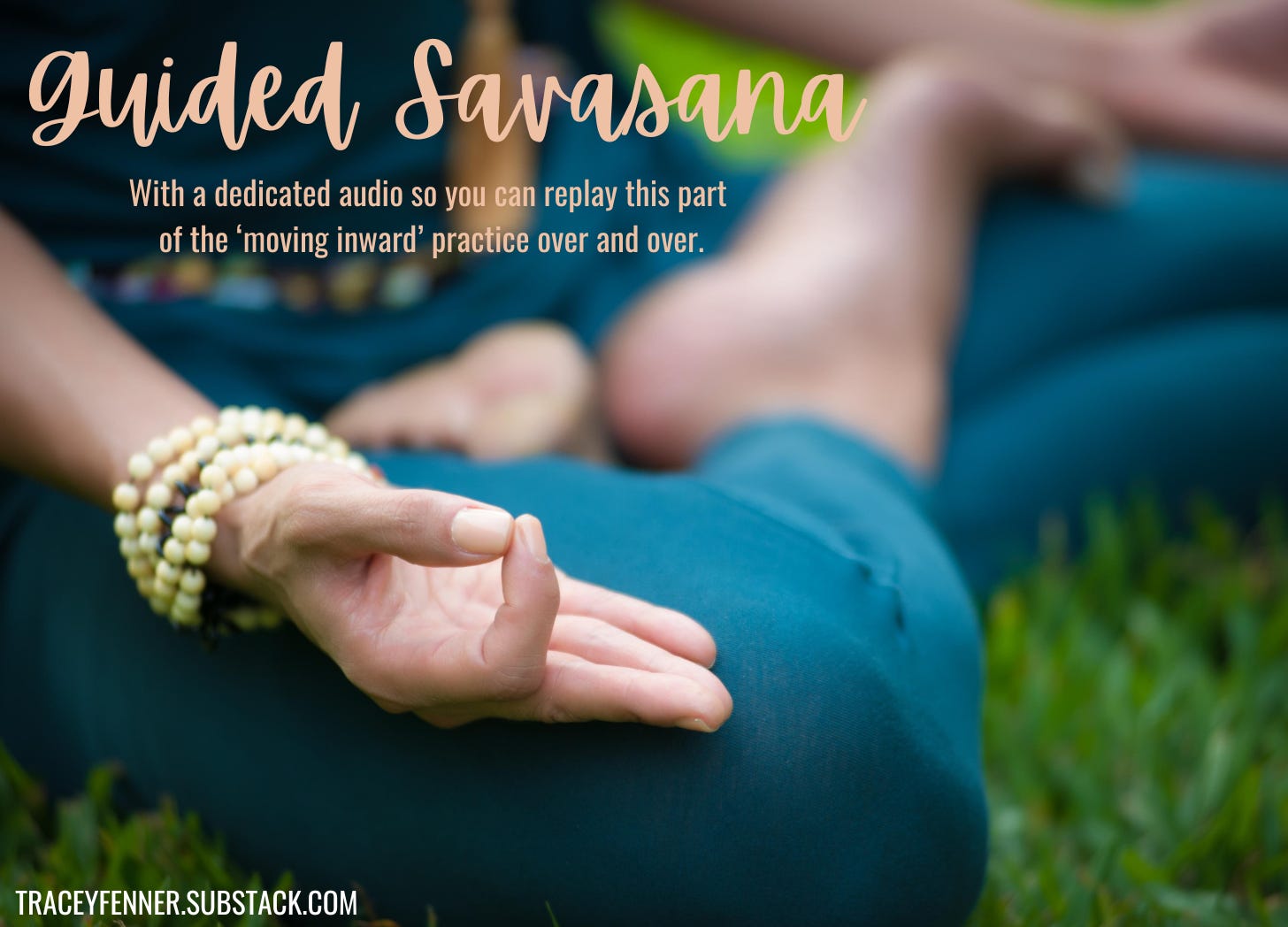
GUIDED SAVASANA AUDIO ONLY
Below is a 15 minute savasana practice guided by me. I have recorded this additional audio separately in order to help you go directly into savasana without the full description above.
Lying down on your mat, with your legs extended, feet at the edges of your mat, with your feet and legs relaxed so that they slightly turn outwards. Relax your arms down on the mat at the side of your hips with the palms facing upwards. Make sure your spine, your shoulders and neck are comfortable. Your head can rest on a cushion, make sure your chin is slightly tucked in, towards your chest (lengthening the back of your neck). Close your eyes and allow your breath to flow effortlessly, without force or control. Resist the urge to move or fidget, instead embrace stillness.
Remember the hardest part is getting to your mat, continuing to show up for yourself with all the ‘things’ you have to do and accomplish today.
If you are drawn to share your discoveries then please share in the comments below. I’d love to know, and your comments may also help someone else reading.
Remember YOU are awesome! Keep showing up for yourself!
As a collective, as a community, we inhale lots of love in, and exhale lots of love out ❤️
It’s an honour to share this time with you.
❤️ Namaste Tracey Xx
Please feel free to share You Are Not Alone with loved ones and friends. I trust whoever needs to read my musings will find them as a source of inspiration and hope. They are all written from my heart and offer the opportunity to dive deeper into truth, authenticity and trust.

Moving Inward - Exercises designed to take with you onto your yoga mat or alternatively next time you go for a walk alone in nature. I hope the audio version helps with this ❤️ how we move matters - where attention goes energy flows.
My Moving Inward invitation is a sweet, sweet friendly reminder to spend some precious ‘me time’ as often as possible. To take inspiration from my essays when you’re next on your mat and devote time to turning your gaze inwards, in order to cultivate a beautiful conscious conversation with your body, mind & emotions. Through this process we get to practise listening, to be who we are, and creatively explore who we want to be.

Thank you so much for this beautifully written post. You have left me with so much to think about 🤎
A lot of wonderful lessons and reminders here, Tracey. Thank you!